We import from
United States · USA
From California's Central Valley, Georgia's plantations and the deserts of New Mexico come almonds, pistachios, peanuts, walnuts and pecans — America's vast bounty.
History
Spanish missionaries planted the first almond trees in California in the 18th century. The pecan is originally a North American native, cultivated by Indigenous peoples for thousands of years. Today the US grows the majority of the world's almonds and pistachios.
Lifestyle
Wide horizons, road trips along Highway 1, Saturday-morning farmers' markets, college football in autumn, Thanksgiving around the family table, Fourth of July barbecues in the backyard — a country of landscapes, from redwood forests to the pecan groves of the South.
Gastronomy
Almonds in pastry and morning granola, pistachios in ice cream and baklava, peanut butter as everyday love on toast, pecan in the Thanksgiving pie, walnut in the brownie — nuts are American comfort food.
The people & families
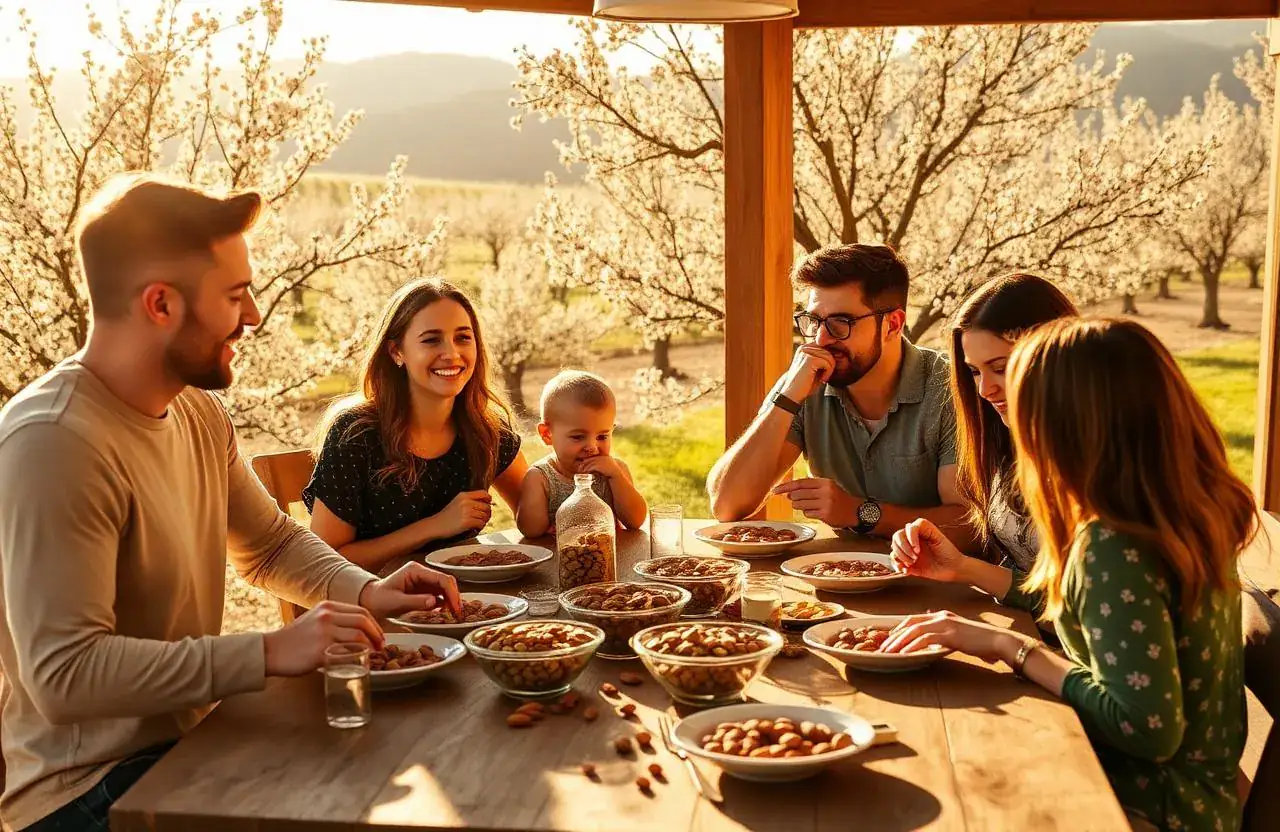
Families picking almonds under the white canopy of bloom in March. Friends sharing a bag of pistachios on a road trip through Arizona. Grandparents baking pecan pie for Thanksgiving — generational habits that travel with the nuts.
Landscapes & farms
Central Valley where 80% of the world's almonds grow — miles-long rows of trees blooming simultaneously in March in a pink-and-white sea. Pistachio groves in San Joaquin. Pecan groves along the Mississippi. Peanut fields in Georgia. Scale beyond the European.
Arts, music & literature
Steinbeck wrote The Grapes of Wrath in the same Central Valley where our almonds grow. Faulkner in the South, Hemingway, Toni Morrison, Cormac McCarthy. Whitman and his Leaves of Grass, Emily Dickinson's garden poetry, Bob Dylan's American ballads, Coltrane's saxophone — the landscape is the body of the literature.
Our partnership
We buy from family-owned farms (many third-generation) certified for water stewardship and biodiversity — in a state where water is gold.
The journey to you
Sea freight from Long Beach or Oakland via the Panama Canal and the Atlantic to Gothenburg — or directly across the Pacific and Suez depending on season. 28–32 days at sea.
Real photographs — people and harvests
Authentic field photographs (Wikimedia Commons, CC-licensed). No AI imagery.


Watch the journey — videos from professional channels
Reports from Business Insider, Insider Food and other professional channels showing how our products are grown, harvested and processed.

